
Near-Row (On-Row) Sowing
What is Near-Row (On-Row) Sowing?
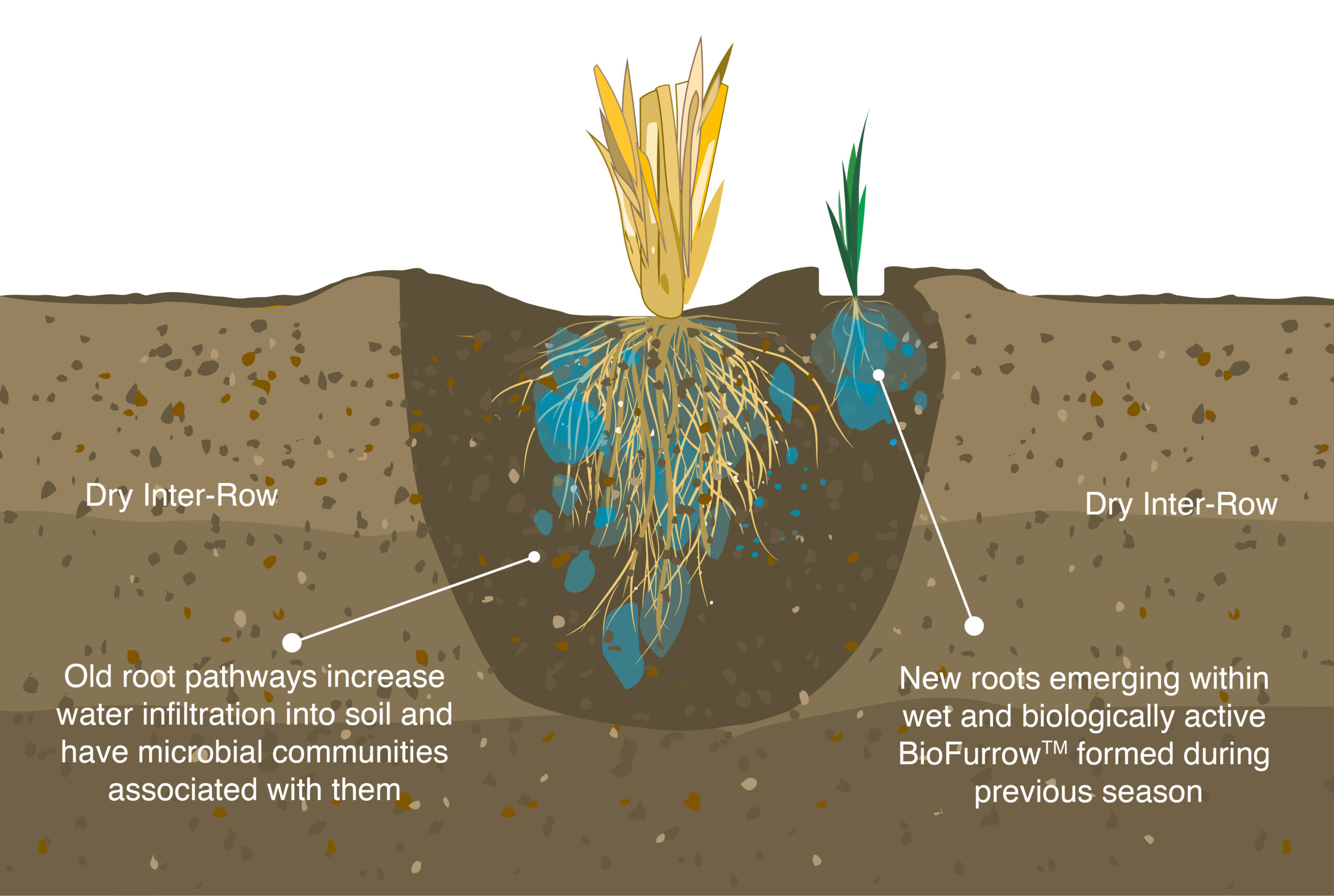
Near-Row Sowing, sometimes referred to as On-Row Sowing, places the seed for a new crop into the biologically rich BioFurrowTM, within 2 cm of the previous year’s crop row. Near-row sowing gives the new season’s crop immediate access to all biological and hydrological benefits built up in the previous season’s BioFurrowTM and provides newly emerged seedlings with enhanced soil water availability and microbial functionality, and access to left-over nutrients and soil amendments, not found in the more arid inter-row (Figure 3). Sowing adjacent to the old row rather than directly above avoids ‘ripping-out’ existing root pathways by knife blades. Hence the term ‘Near-Row Sowing’.
Near-Row Sowing increases the soil water content around the emerging seedling and increases crop yields in some years:
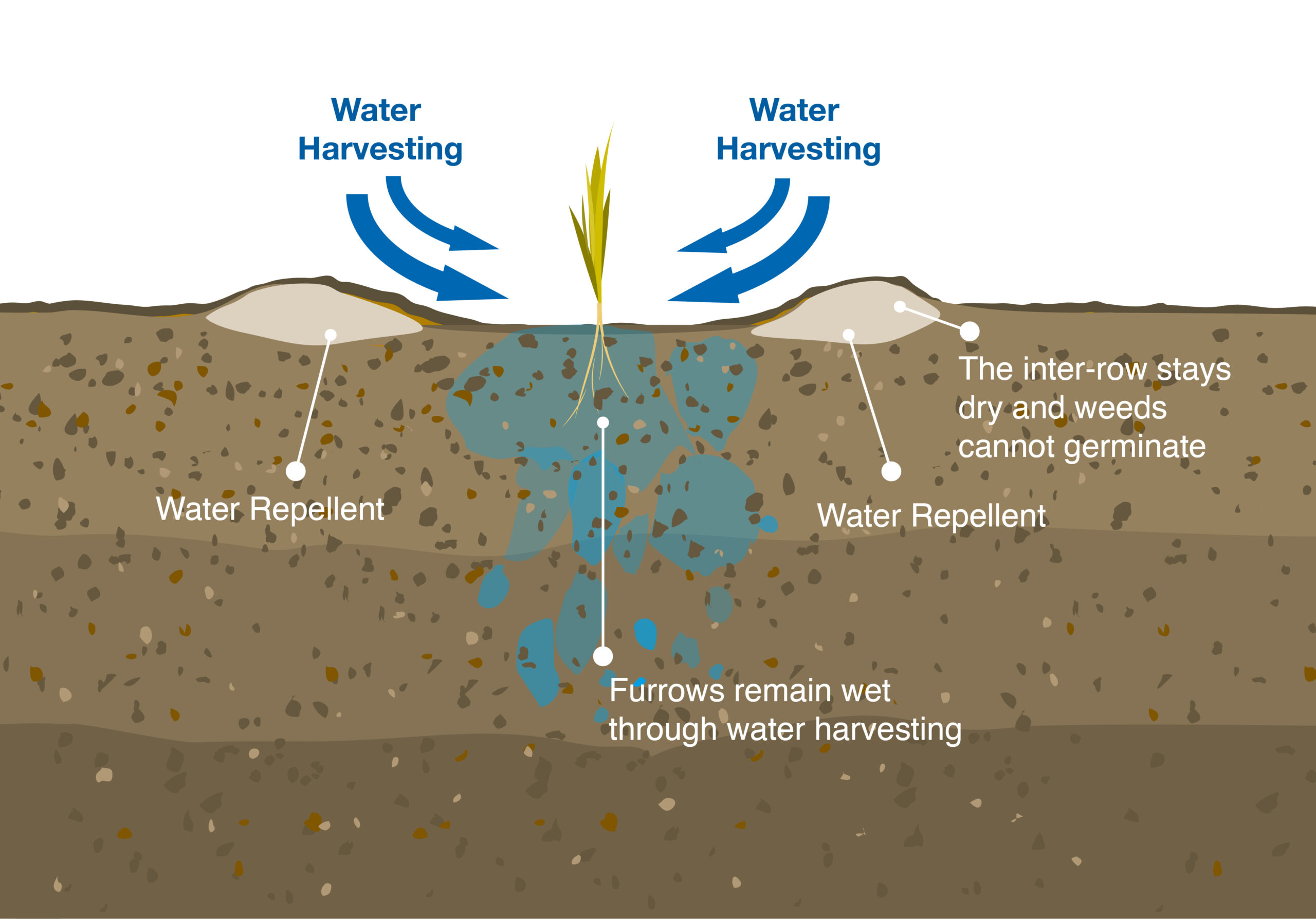
Crop roots from previous seasons are preserved under no-till and minimum tillage systems, and these act as pathways for water entry into soils. This is particularly important in water repellent soils because water infiltration down old root pathways by-passes repellent surface soil layers, wetting up sub-soils and promoting plant growth (Figure 4).
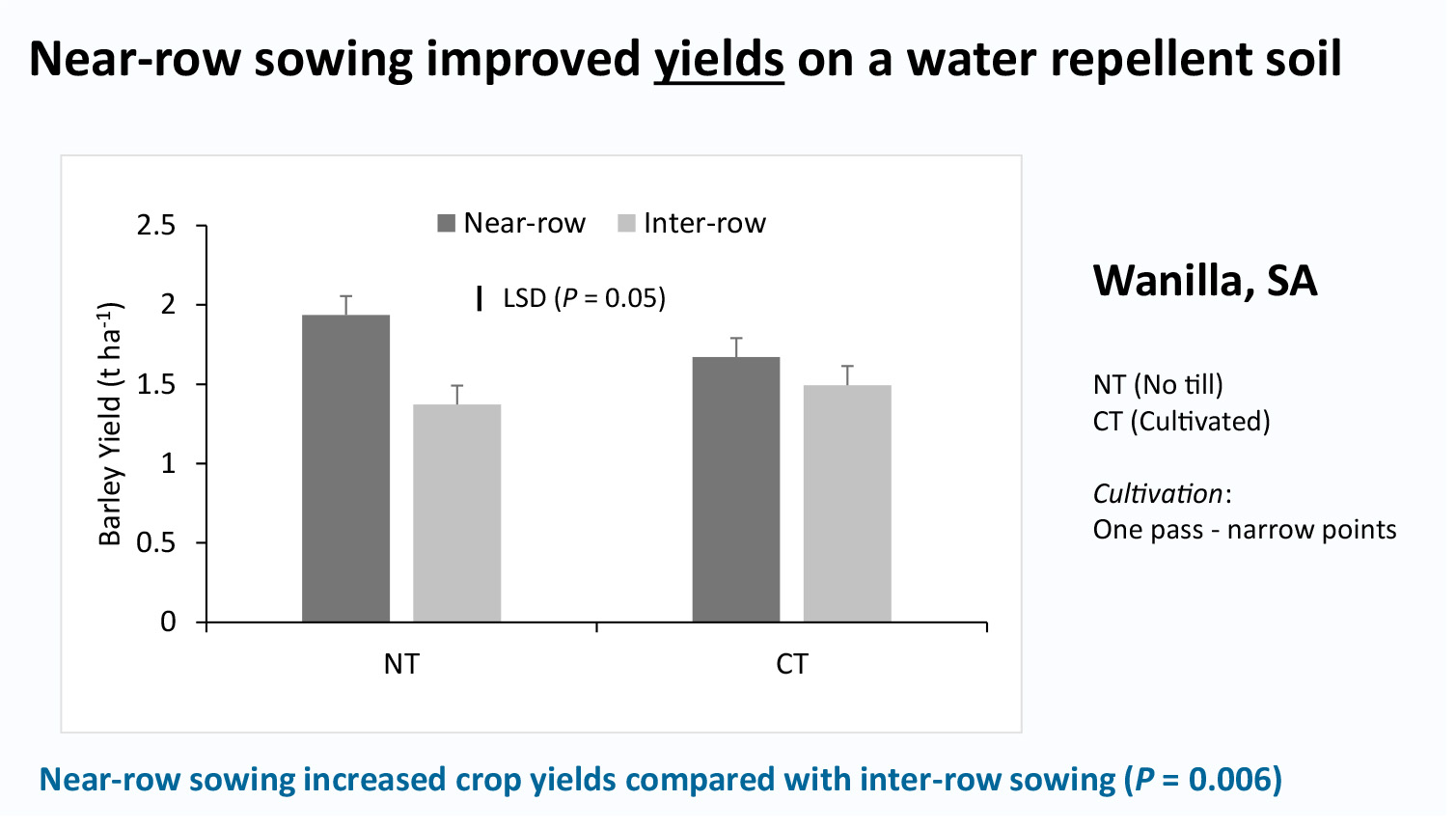
Seeding a new crop in the previous year’s BioFurrowTM next to old root pathways can increase crop emergence compared with those sown on the inter-row (Figure 5) and in some years significant increases in crop yields have been observed (Figure 6).
Apart from increased water supply, sowing a new crop next to the previous year’s crop row provides access to left-over nutrients and amendments, (e.g. calcium carbonate to modify pH) (Figure 7) all of which may contribute to increased grain yields. Soils with low pH can be slow to respond to lime treatment and therefore, seeding a new crop into the previous year’s BioFurrowTM where targeted liquid lime treatment commenced a year earlier, has the potential to increase the availability of plant nutrients (due to a more favourable pH) compared with the untreated and more acidic inter-row.
Changing the soil pH and CaCO3 mobility with CaCO3 (0.0015mm)
Figure 7 - Calcium carbonate (CaCO3) with 0.0015 mm size particles moves through the soil more quickly than lime containing larger particle sizes.
Photo on LHS shows a pH indicator sprayed on the surface of an acidic soil (yellow). Where CaCO3 (0.0015 mm) was applied, the pH below the application point increased (green zone) and this extended to approximately 80 mm depth.
Photo on RHS. Plants which received CaCO3 (0.0015 mm) were more vigorous both above and below ground than controls without CaCO3. An ideal soil pH increases the availability of nutrients to plants. (Photo credit: Dave Seagreen)

What are the implications for crop diseases and weed infestation under Near-Row Sowing compared with inter-row sowing?
Near-Row Sowing has been shown to reduce competition from weeds, especially on water repellent soils because the inter-row remains dry and weed seeds do not germinate (Figure 8).
Near-row sowing reduces weeds on water repellents soils
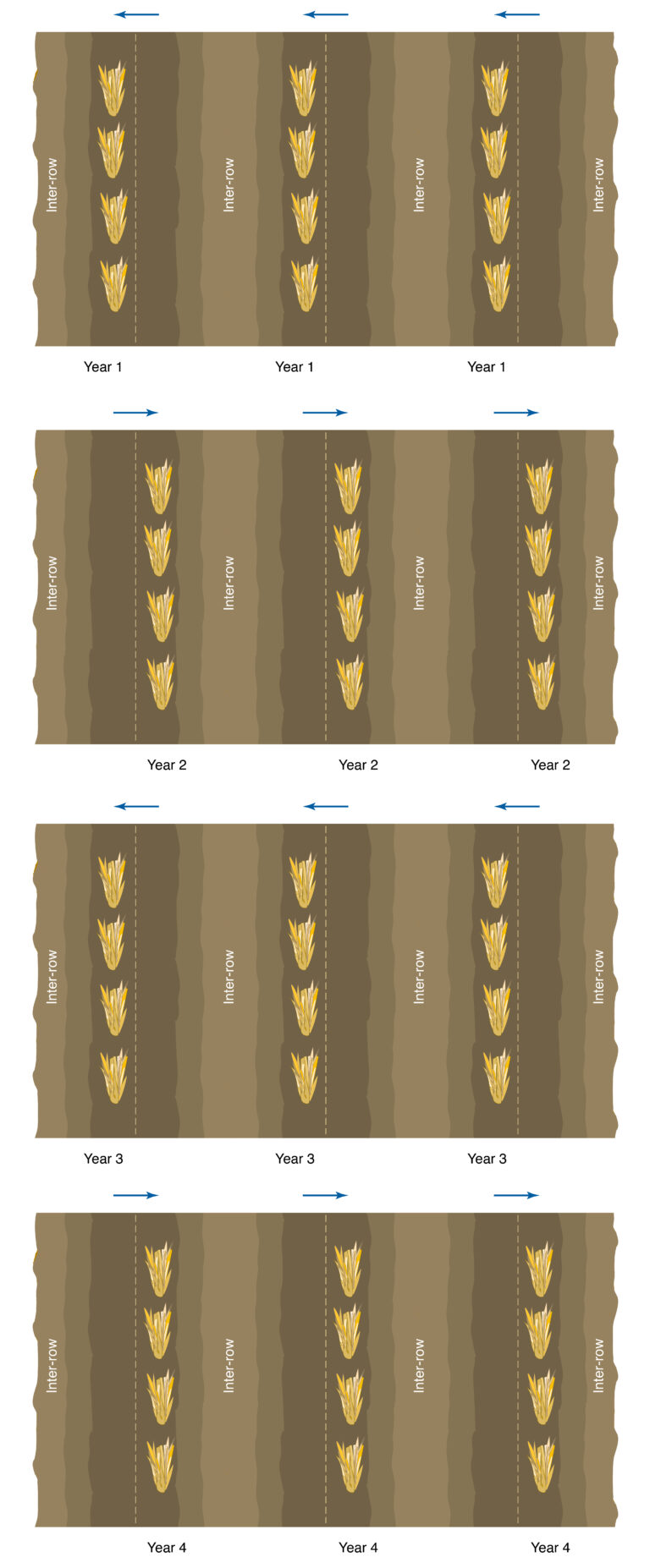
Patterns of near-row sowing:
There are two patterns by which Near-Row Sowing can be achieved:
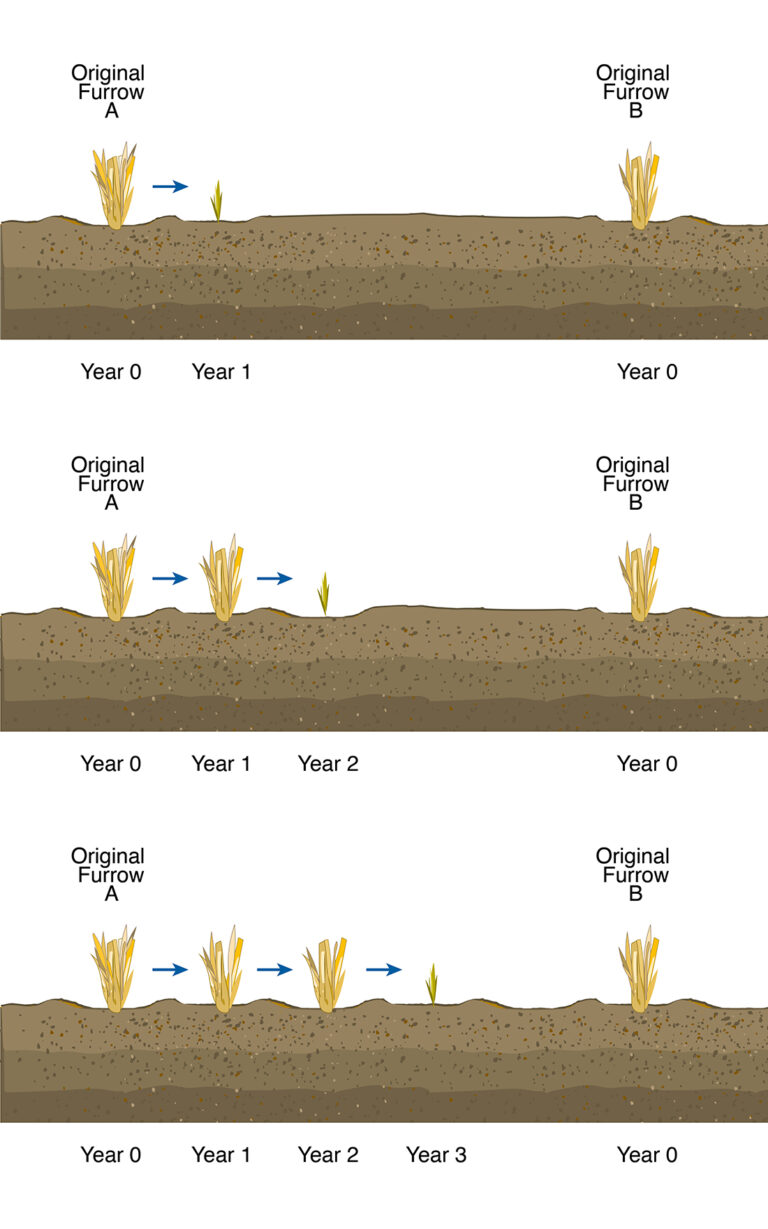
a) Moving incrementally by 1-2 cm per year in one direction
b) Alternating back and forth by 1-2 cm on either side of a central point.
Pattern (a) aims to spread, over time, the benefits of the BioFurrowTM across the entire paddock (Figure 9a). However, little is known about the longevity of the BioFurrowTM in any one position and it may simply be a sideways movement of the BioFurrowTM with little retention of benefits in each position beyond 1 or 2 years.
Pattern (b) concentrates the benefits of the BioFurrowTM over one central point where it can be maintained in perpetuity (Figure 9b). Reinforcing the BioFurrowTM in the same location each year may be particularly useful in fragile sandy soils where organic matter is less stable than in loamy soils. Loamy soils contain clays known to stabilise and protect organic matter.
Figure 9b - Patterns of near-row sowing: (b) Each year the new furrow alternates back and forth by 1- 2 cm on either side of a central point (dashed line) leaving the inter-row untouched. Drawing: M. Roper (Ausplow)
Near-Row Sowing into a biologically active BioFurrowTM, through the DBS seeding system, is an exciting concept for delivering productive, healthy crops with high quality grain.