
BioFurrow™

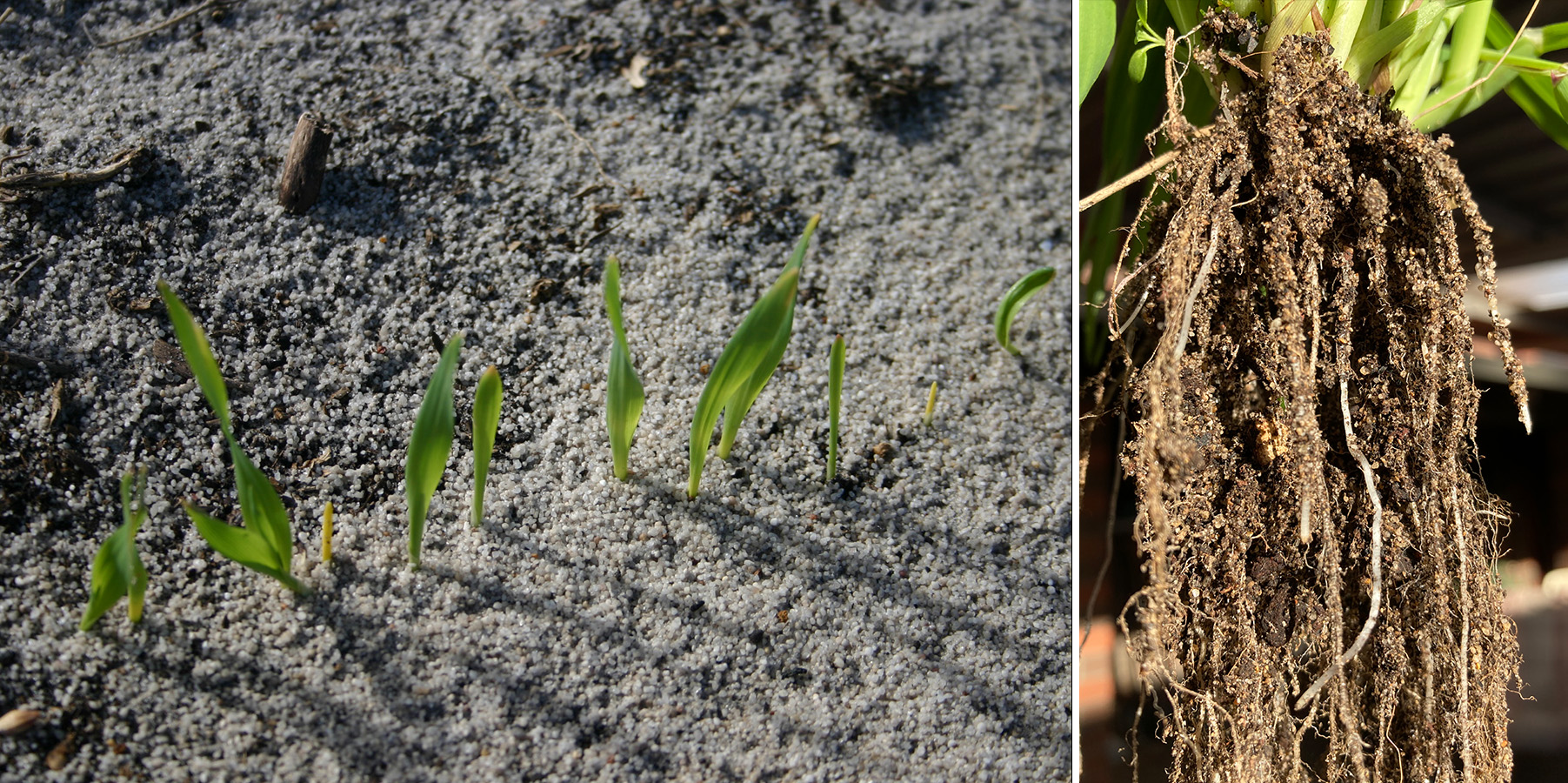
This mutually beneficial arrangement between plants and microbial communities associated with the roots, that results in a proliferation of numbers and diversity of microorganisms in the root zone and enhanced plant growth, constitutes the BioFurrowTM (Download PDF). Development of a fully functioning BioFurrowTM takes time and builds throughout the growing season of a crop. Therefore, it is desirable to retain this biologically active BioFurrowTM in subsequent cropping seasons. Near-Row (On-Row) Sowing into the previous season’s BioFurrowTM is a way of achieving this and extending the benefits to following crops.
Additional Source Material on the BioFurrow

Carbon is Cycled Through Plants and Soil Microorganisms Delivering Energy for Biological Processes.
(Margaret M Roper)
Carbon is the basic building block of all living creatures. It is the basis of all organic compounds and without carbon there would be no life.
In terms of energy, carbon is well known as an energy source in non-living systems (e.g. oil and coal, which when burnt deliver energy).
In living creatures carbon delivers energy through the metabolism of sugars which are also carbohydrates (consisting of carbon, hydrogen and oxygen). Almost all living organisms use sugars (in one form or another) for energy where sugars are metabolised to carbon dioxide and water with an associated energy output.
During photosynthesis plants take up carbon dioxide from air and convert it into glucose (which is the simplest sugar/carbohydrate). Within the plant, glucose is converted into more complex carbohydrates including cellulose which forms much of the structural components of plants, but some glucose and other simple sugars are transported to the roots. Here the glucose may be utilised to grow the roots, but some will leak out into the soil around the roots and feed soil microorganisms which also need carbohydrates/sugars to grow and produce enzymes and other beneficial compounds needed by the plant.
Once a plant dies, the carbohydrate components of the plant including cellulose and simpler carbohydrates are broken down by soil organisms to provide energy for other microbial processes in the soil. Eventually the carbohydrates will be used up and given off as carbon dioxide and water and the whole process starts again with another plant taking up this released carbon dioxide.
Only leaves with chlorophyll can photosynthesise carbon dioxide. Newly germinated seeds cannot and are dependent on the starch reserves (a simple carbohydrate) in the seed for energy. Once the new shoots emerge and produce green leaves, photosynthesis in the new plant can begin. (Starch consists of glucose molecules joined together and is very easily metabolised).
In a farming context, retaining crop stubbles after harvest may increase the amount of carbon available to soil microorganisms and may contribute to soil carbon reserves. Chopping the straw and spreading it on the soil surface enables more rapid decomposition carbon-rich stubbles, releasing (1) simple sugars that drive microbial processes in soils, and (2) left-over mineral nutrients for use by soil microbial communities and new plants.